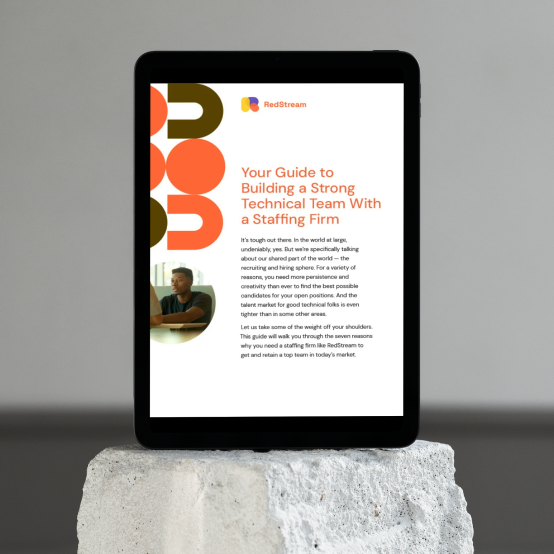

Digital transformation remains a top priority for enterprise leaders, but many organizations are rethinking how transformation actually happens. While technology budgets continue to grow, companies are learning that large-scale change does not always require large-scale teams. In many enterprises, the most impactful digital initiatives are being led by small, cross-functional groups that move faster, test ideas quickly, and demonstrate measurable business value before broader deployment. As organizations look for ways to modernize operations, improve efficiency, and adopt emerging technologies such as AI, these agile teams are becoming a critical force behind enterprise-wide transformation.
Small Teams Reduce Organizational Friction and Accelerate Decision-Making
Large-scale initiatives often struggle not because of technology limitations, but because of organizational complexity. As companies pursue enterprise digital transformation, decision-making becomes slowed by multiple approval layers, competing priorities, and disconnected departments. As a result, even well-funded projects take months to gain momentum.
Why Smaller Teams Move Faster
One of the biggest barriers to successful enterprise digital transformation is friction. Every additional stakeholder, approval process, or reporting layer introduces delays that slow innovation and reduce responsiveness. By contrast, cross-functional enterprise teams bring together business, technology, and operational expertise within a single group, allowing decisions to be made closer to the problem being solved.
This approach has become increasingly important as organizations seek to improve enterprise agility scale without sacrificing governance or accountability. According to Deloitte’s 2025 Chief Transformation Officer Study, transformation has become a permanent executive priority, with leaders placing greater emphasis on execution models that accelerate change while maintaining business alignment.
From Broad Programs to Focused Outcomes
Instead of launching organization-wide initiatives from day one, leading enterprises are breaking transformation efforts into smaller, outcome-driven projects. For example, a team focused on automating invoice approvals or improving customer onboarding delivers measurable improvements within weeks rather than quarters.
Furthermore, these targeted wins help organizations build confidence, validate assumptions, and create a foundation for broader enterprise digital transformation. In many cases, successful pilots become repeatable frameworks that support enterprise agility scale across multiple departments.
Building Momentum Through Faster Execution
The most effective cross-functional enterprise teams are not simply moving faster; they are creating a repeatable model for change. By reducing friction, shortening feedback loops, and focusing on clearly defined business outcomes, these teams help organizations advance enterprise digital transformation while strengthening enterprise agility scale.
As enterprises continue to modernize operations, speed alone is no longer the competitive advantage. The real differentiator is the ability to turn ideas into measurable results quickly. This becomes even more important when organizations begin scaling emerging technologies such as AI, where collaboration across functions determines whether innovation remains a pilot project or evolves into lasting business value.
Cross-Functional Teams Turn AI Experiments into Real Business Outcomes
While many organizations have embraced AI, a growing number are facing the same challenge: moving beyond experimentation. Pilot programs are everywhere, yet measurable business impact remains difficult to achieve. For leaders focused on enterprise digital transformation, the question is no longer whether to invest in AI, but how to turn those investments into operational value.
Increasingly, the answer lies in the structure of the teams leading implementation efforts.
Technology Alone Doesn’t Drive Transformation
One of the most common reasons AI initiatives stall is that they are treated primarily as technology projects. While technical expertise is essential, successful adoption often depends on understanding business processes, employee workflows, and customer needs.
As a result, organizations are relying more heavily on cross-functional enterprise teams that combine IT specialists, business leaders, operations managers, and end users. By bringing multiple perspectives into the development process, these teams identify practical use cases and avoid solutions that look promising on paper but fail in real-world environments.
Start With Workflows, Not Tools
Rather than asking where AI has to be deployed, leading organizations are asking where business processes have to be improved. For example, instead of implementing AI across an entire department, companies begin by streamlining customer service ticket routing, accelerating document processing, or improving internal knowledge management.
This targeted approach helps cross-functional enterprise teams connect technology investments directly to operational goals. Furthermore, it creates a more sustainable path toward enterprise agility scale, as successful workflows are replicated across multiple business units.
Scaling What Works
The organizations seeing the greatest returns from AI are not necessarily those spending the most. Instead, they are the ones creating systems that allow successful use cases to expand efficiently across the enterprise. In this way, AI becomes a practical enabler of enterprise digital transformation rather than an isolated innovation initiative.
Moreover, when cross-functional enterprise teams are empowered to test, refine, and scale solutions collaboratively, businesses are better positioned to achieve enterprise agility scale without introducing unnecessary complexity.
As AI adoption continues to mature, enterprises that focus on business outcomes first are far more likely to translate innovation into lasting competitive advantage. That same principle applies beyond AI, shaping how successful organizations approach transformation at every level.
Small Teams Become Enterprise Change Multipliers
The most successful transformation teams do more than solve individual business challenges; they create models that are replicated across the organization. Once a team demonstrates measurable results, other departments adapt their methods, workflows, and lessons to solve similar challenges.
This is where small teams begin to generate enterprise-wide impact.
Creating Repeatable Transformation Frameworks
Many organizations approach transformation as a series of disconnected projects. However, sustainable enterprise digital transformation requires a more scalable approach. Rather than reinventing processes for every initiative, leading enterprises are documenting successful strategies and building playbooks that other teams are able to follow.
For example, a team that successfully implements AI-assisted document processing establishes governance practices, performance metrics, and change management guidelines that later support additional automation projects. Consequently, transformation becomes faster, more consistent, and easier to scale.
According to IBM’s 2025 AI in Action research, organizations reporting the strongest business outcomes from AI initiatives are also more likely to have established clear operating models and governance structures that support expansion across the enterprise.
Knowledge Sharing Drives Enterprise Agility
Technology alone does not sustain transformation. Organizations have to also create environments where teams share expertise, replicate successes, and learn from failures. This is why many high-performing companies are investing in internal communities of practice, cross-functional collaboration frameworks, and structured knowledge-sharing programs.
As these capabilities mature, cross-functional enterprise teams become catalysts for broader organizational change. Rather than operating in isolation, they help spread innovation across departments, accelerating enterprise agility scale and reducing the risks associated with large-scale transformation initiatives.
Building a Culture That Sustains Change
Ultimately, long-term success depends on an organization’s ability to make transformation repeatable. While individual projects deliver short-term wins, sustainable growth comes from empowering teams to continuously identify opportunities, solve problems, and share what they learn.
By embracing this approach, organizations accelerate digital transformation, scale agility, and maximize the value of cross-functional teams. In a constantly evolving business environment, companies that adapt quickly, scale successful ideas, and align technology with operational goals will lead their industries.
Ultimately, whether implementing AI, modernizing workflows, or improving operational efficiency, the most successful organizations are leveraging cross-functional enterprise teams to drive enterprise digital transformation while maintaining the flexibility required for enterprise agility scale. By reducing friction, focusing on measurable outcomes, and creating repeatable frameworks for innovation, these teams are proving that enterprise-wide change does not have to start big to deliver big results.
Ready to accelerate your digital initiatives without adding unnecessary complexity? RedStream Technology helps organizations build the strategies, technology frameworks, and collaborative operating models needed to turn innovation into measurable business outcomes. Contact us today to learn how your organization is able to scale transformation, improve agility, and maximize the impact of every technology investment.

About RedStream Technology
RedStream Technology is a premier provider of technical, digital, and creative staffing, specializing in delivering tailored solutions that meet the specific needs of our clients. With a keen focus on quality and efficiency, RedStream offers a range of services from contract staffing to permanent placements in various IT, Digital and Creative specialties. Our team of experienced professionals is committed to providing innovative staffing solutions to our clients and finding the right fit for our candidate’s long-term goals. RedStream Technology is dedicated to increasing client productivity while helping technology, digital, and creative professionals navigate their ever-changing needs and career path. For more information, visit www.redstreamtechnology.com